
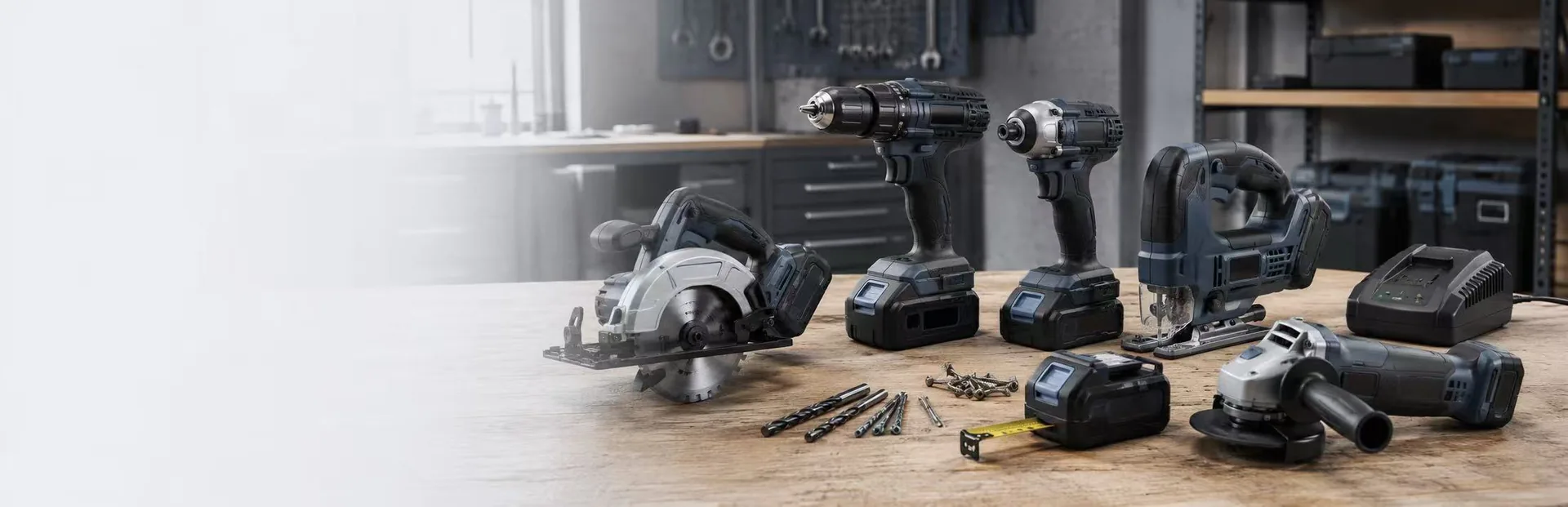
Power Tool Sourcing from China
Source modern power tools from China with a focus on product design, user experience, performance consistency, and long-term supplier reliability.
What Power Tools Buyers Usually Source
Power tools sourcing covers cordless tools, corded tools, batteries, chargers, accessories, and tool systems. Each category requires different checks on motor performance, safety, durability, certification, and supplier support.
Cordless Power Tools
Drills, impact drivers, grinders, saws, and multi-tools where battery platform, torque stability, runtime, and safety controls matter.
Corded Power Tools
Electric drills, cutters, sanders, grinders, saws, and demolition tools where motor durability, heat control, safety, and certification need to be checked.
Garden & Outdoor Power Tools
Trimmers, blowers, chainsaws, hedge cutters, and outdoor tools where motor load, weather exposure, battery life, and user safety are important.
Batteries & Chargers
Battery packs, chargers, fast chargers, and battery platforms where cell quality, BMS protection, compatibility, and transport documents are critical.
Accessories & Consumables
Blades, bits, discs, sanding pads, cases, and consumables where material quality, fit, safety, packaging, and repeat supply matter.
Tool Kits & Private Label Programs
Tool sets, OEM packaging, private label product lines, and bundled programs where consistency, documentation, and supplier coordination are essential.
Performance Must Be Proven Under Load
Torque, runtime, heat, vibration, safety systems, battery performance, and durability should be tested under realistic working conditions.
Real load performance matters
Torque, speed, cutting power, vibration, heat, runtime, and battery behavior should be reviewed under realistic working conditions.
Safety design affects liability and returns
Switch design, guards, insulation, overload protection, battery protection, charger safety, and user instructions need careful review.
Durability is harder than a short demo
Power tools require endurance testing, drop testing, aging tests, motor life checks, and repeated-use validation before production decisions.
After-sales support affects profitability
Buyers should evaluate spare parts, replacement batteries, accessory supply, warranty handling, defect analysis, and model continuity.
"Power tools sourcing succeeds when performance, safety, durability, compliance, and lifecycle support are evaluated together."
Power Tools Sourcing Risk Map
Before choosing a power tools supplier, buyers should understand where project risk may appear. The main risk is often not one visible defect, but a gap between advertised specifications and reliable performance under real working conditions.
Performance Under Load Risk
Power, torque, runtime, cutting ability, and heat behavior may not match claims if products are not tested under real working conditions.
Battery & Charger Risk
Cordless tools rely on battery packs and chargers. Weak cell quality, poor BMS, or unsafe charging can create warranty and safety exposure.
Safety & Compliance Risk
Power tools may require certifications, safety labels, manuals, guards, insulation checks, and destination-market documentation before shipment.
Durability & Lifecycle Risk
A tool line can create long-term cost if spare parts, accessories, batteries, defect analysis, or model continuity are not supported.
Supplier Capability Review Framework
Symavia reviews power tools suppliers from multiple angles, not only price and product appearance. The goal is to understand whether the supplier can support a real sourcing project from sample testing to production, shipment, and after-sales support.
Motor & Performance Capability
Review motor type, torque stability, speed control, load performance, heat behavior, vibration, and practical testing method.
Battery Platform & Charger Control
Check battery cell sourcing, BMS design, charger safety, platform compatibility, runtime testing, and battery document readiness.
Safety & Certification Readiness
Evaluate guards, switches, insulation, overload protection, labels, manuals, test reports, and destination-market documentation.
Production & Quality Control
Review assembly flow, endurance testing, functional tests, aging tests, inspection checkpoints, defect records, and batch consistency.
OEM/ODM Flexibility
Assess whether the supplier can support branding, packaging, tool kits, accessory configuration, language requirements, and product line adjustments.
After-Sales & Lifecycle Support
Check spare parts, accessories, replacement batteries, warranty process, defect analysis, technical response, and model continuity.
Project Readiness Checklist
Power tools projects should be clarified before supplier commitment. A clear requirement package helps suppliers quote accurately and helps buyers compare offers beyond wattage, torque, battery size, or unit price.
What Buyers Should Prepare
What Suppliers Should Confirm
Power Tools Buyer Insight
Power tools should not be reviewed only by design, wattage, torque, battery size, or unit price. Two suppliers may offer similar-looking tools, but the real difference may appear in motor durability, battery platform stability, heat control, safety details, production testing, and after-sales support.
Look beyond catalog specifications
In power tools sourcing, catalog specifications and short sample tests are not enough. Buyers should ask how the tool performs under load, how heat and vibration are controlled, how batteries and chargers are tested, how safety features are validated, and whether spare parts and accessories will remain available after shipment.
Evaluate the supplier behind the tool
A strong power tools supplier should be able to explain not only what the tool can do, but how it is tested, certified, packaged, repaired, supported, and supplied consistently over time.
"The real sourcing question is not only whether the tool works in a sample test, but whether the supplier can deliver safe and durable tools consistently."
Services for Tool Supplier and Quality Control
Power tools projects often require supplier verification, factory checks, OEM/ODM coordination, quality control, and logistics support depending on where the project risk appears.
Supplier Verification
Use this when you need to confirm supplier legitimacy, tool product experience, export capability, and communication reliability before moving forward.
Learn moreFactory Audit
Use this when factory setup, assembly process, testing capability, safety control, quality systems, or on-site conditions need deeper review.
Learn moreQuality Control
Use this when samples, production batches, packaging, functions, safety checks, or finished goods need inspection before shipment.
Learn moreOEM/ODM Support
Use this when branding, packaging, tool kits, accessory configuration, manuals, language, or product line details need supplier coordination.
Learn moreLooking for reliable power tool suppliers?
Share your product requirements, quality expectations, and target market. We’ll help evaluate suitable suppliers in China.